

B2G sales rep onboarding: what to cover
A 90-day onboarding plan for a new B2G sales rep. What to teach in each phase, the account context to hand over on day one, and the milestones to track.

A B2G sales rep you hire in September may not close anything until spring, and that has little to do with how good they are. School boards and city councils approve purchases on a long sales calendar no rep can control.
This guide covers a 90-day onboarding plan for a new B2G sales rep, the account context to hand over on day one, and the milestones that show when the rep is ready to own pipeline.
What does B2G sales rep onboarding cover in the first 90 days?
B2G sales rep onboarding should cover the account context in the rep’s territory, the procurement paths a deal can take, and account prioritization based on budget calendars and upcoming incumbent contract expirations.
The plan below assumes the rep is selling to state and local government, K-12 school districts, and higher ed institutions, where the buyer’s calendar sets the pace.
How public sector buying cycles change ramp expectations
Forty-six states begin their fiscal year on July 1, according to the National Association of State Budget Officers.
This means budget planning starts in January, and the concentrated purchasing window falls between April and June, when allocated money must be committed or lost.
That buying calendar determines how quickly a new rep can realistically produce results.
In government and education sales, the best time to engage often begins 12 to 18 months before a solicitation is published. At that stage, the buyer is still defining the problem, discussing priorities internally, and deciding whether funding should be set aside.
Once requirements are being drafted, roughly six months out, the vendor who helped shape them is already the front-runner.
That means a rep’s start date matters. A rep who joins in September can spend the fall building relationships with accounts entering budget and planning cycles for purchases the following spring. A rep who joins in February has less time to influence those decisions before many organizations reach the end of their fiscal-year buying window, followed by a slower period before the next cycle begins.
Build the ramp around the buyer’s calendar instead of a quarterly close target, and expect the rep’s first two quarters to generate qualified pipeline rather than signed contracts.
Territory and account context a new B2G rep needs on day one
A new rep cannot build territory context alone in week one. The answers sit in public records, spread across board agendas, adopted budgets, and contract files for every entity in the territory.
Reps end up manually searching and building lists in spreadsheets, which takes a lot of time and still produces a thin picture of a few accounts.
We recommend giving the rep this on day one:
- Every entity in the territory with its type, size, and fiscal year start
- The budget adoption date and planning window for each priority account
- Incumbent vendors, contract values, and expiration or renewal dates
- Prior touches, past bids, and any relationship the company already has
- Board or council meeting cadence, plus where agendas and minutes get published
- Verified contacts for the end user, the technical evaluator, and the economic buyer
- The purchasing paths already open to your company, including cooperative contracts
Prioritize the accounts in your reps territory
Territory context only becomes useful once the accounts are ranked.
Account scoring turns thousands of districts, cities, and campuses into a short list a new rep can work this quarter, ordered by how likely each account is to buy.
Rank on the buying indicators that matter in this market, starting with board discussion of the problem, a new budget line, and an expiring incumbent contract. Grant awards and leadership changes should be included in the model as well.
If you want to automate the manual lead research process, consider Starbridge.
Starbridge is the AI GTM platform for companies selling to the government, K-12, and higher education, helping teams prioritize the right accounts, engage the right people earlier, and identify high-intent opportunities before the competition. A new rep logs in to a scored territory instead of a raw account list, with the buying indicator behind each account, the contacts to call, and the contract history beneath it.

Zach Oxman, Area VP for U.S. State, Local Government and Education at Abnormal AI, reports 10 hours saved per rep per week and faster new-hire ramp-up. “Instead of going to 10 or 15 different places to find information, it lets us get actionable really quickly in one central place.”
The first 90 days of B2G sales onboarding, phase by phase
Guide the rep through the buying process itself, adding live account work as classroom instruction tapers off. Each phase below assumes weekly coaching with a manager who reviews real accounts.
Days 1 to 30
Cover the company, the product, and the buyer.
The emphasis on the buyer is different to B2B sales. A new rep needs to understand how money flows into a purchase in their territory. That includes budget adoption and grant funding, plus the difference between a formal solicitation, a cooperative contract, and a purchase small enough to qualify under a sole-source threshold.
Make it concrete. Have the rep read the last two board meeting packets and the adopted budget for five accounts in their territory, then write up what each entity is trying to fix. Have them shadow discovery calls that same week so the language they read shows up in live conversations.
That manual research is useful for teaching the rep what to look for. It does not need to remain their primary way of finding accounts. Starbridge’s Buying Signals Monitor continuously tracks activity across budgets, board meetings, grants, contracts, and procurement data and surfaces accounts showing relevant buying activity.

Instead of spending the rest of the month building a territory from scratch, the rep can start evaluating those accounts and sending reviewed outreach in the first week. By day 30, they should be comfortable identifying why an account may buy and explaining why it is worth contacting now.
Days 31 to 60
Move from reading to doing. The rep books and runs first meetings with a manager on the call, then debriefs on what the account is actually trying to solve and where the money would come from.
The core skill is reading a board packet or budget document for early demand signals and determining the buying window from its contents. Mapping the buying committee matters just as much, since the end user who wants the product, the technical evaluator who assesses it, and the administrator who signs off are rarely the same person.
This is where account and contact research can otherwise consume much of the rep’s time. Contact & Account Enrichment gives them verified government and education contacts alongside account attributes such as budgets, enrollment, employee counts, and propensity to spend.

The rep can then spend more of days 31 to 60 practicing discovery, mapping stakeholders, and advancing real opportunities rather than assembling the underlying account record.
Practice handling the timing objection as part of that work. Buyers who say they will run a solicitation next year are often giving the rep useful information about when the opportunity will become active and what needs to happen before then.
Days 61 to 90
The rep runs their own outreach and discovery. Reviews shift from call coaching to account planning, with a written plan for top accounts that identifies the buying window, the incumbent, and the reason to reach out now.
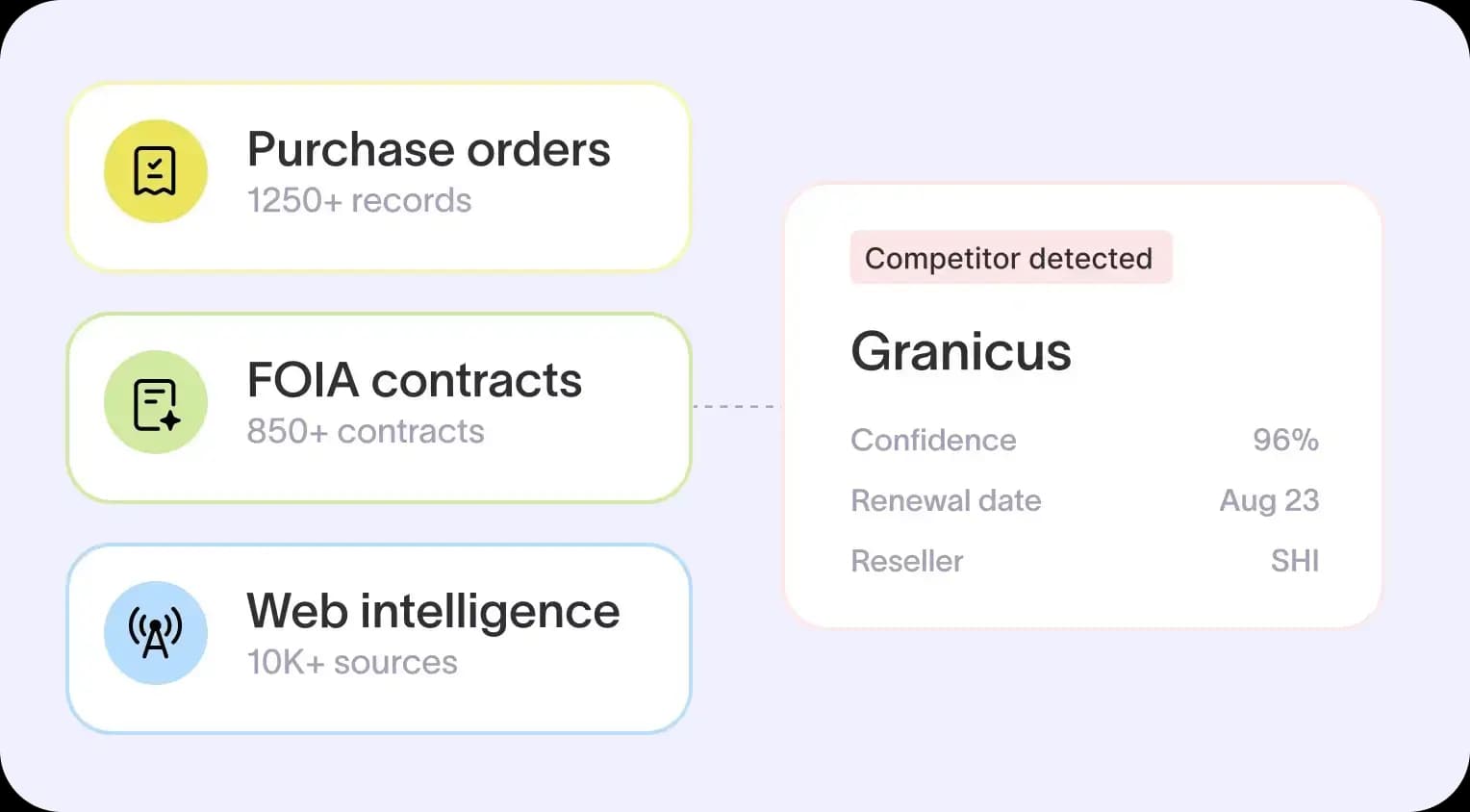
At this stage, the questions also become more competitive: Who does the account already buy from? What did it pay? When does the contract expire? Which purchasing channels has it used before?
Those are questions a rep could answer by piecing together contracts, purchase orders, award records, and procurement portals. Starbridge’s Public Spend Intelligence brings that information together so the rep can use it in the account plan rather than spend the bulk of their time finding it.
Add RFP proposal work in this phase as well. Have the rep draft a response to a recent or active solicitation in the territory and review it line by line, including the compliance sections nobody enjoys. A rep who has assembled one response reads future opportunities more accurately and knows what information to gather during discovery. When a relevant solicitation does appear, the RFP Finder & Proposal Writer can help identify it and produce a compliant first draft.
If the calendar cooperates and the rep hits day 90 in the spring, put them into the end-of-year window with a coach beside them. Buyers with money to commit before the fiscal year closes need a fast purchasing path, not a lengthy evaluation.
The goal is not simply to complete 90 days of training. It is to remove enough of the manual research from each phase that the rep reaches independent sales execution sooner. For a research-heavy public-sector sales motion, that can reasonably move meaningful independent execution into roughly the 60- to 75-day range, rather than requiring the full 90 days before the rep can operate with little oversight.
Ramp milestones that show a B2G rep can own pipeline
Evaluate the ramp based on the work the rep controls. In public sector sales, a closed deal is a lagging indicator that may arrive as late as two budget cycles after the hire date.
- Coverage: The rep has reviewed and ranked their priority accounts and can explain the ranking.
- Outreach quality: Every message names a specific buying indicator at that account.
- Meetings with the right roles: Not whoever happens to answer.
- Multithreading: At least two contacts engaged at each active account.
- Account plans that carry a dated buying window and a named incumbent
- One reviewed proposal response
- Qualified pipeline: Each opportunity pairs a buying indicator with a verified contact and a concrete reason the timing works
Expect meetings and qualified pipeline by day 90, and treat revenue as a later checkpoint.
If you want to accelerate the ramp time of B2G sales reps, consider Starbridge.
Starbridge gives every new rep a scored territory, the buying indicators behind each account, and verified contacts on their first login, often shortening ramp time by weeks while increasing reps’ effectiveness.

Book a demo to see what your next rep’s territory looks like, with the research already done.
Frequently asked questions
It divides a new rep’s first quarter into learning, practicing, and owning. The first 30 days build market and product knowledge, the next 30 apply it on live accounts with a manager present, and the final 30 are run independently against defined ramp milestones.
Most programs progress through pre-start preparation, orientation, and product and market training. Guided selling alongside a manager comes next, followed by independent execution measured against ramp milestones. Programs selling to government and education also include procurement paths and account research.
Longer than in B2B sales. The Bridge Group’s 2024 research found the average account executive ramp to be 5.7 months across 172 software companies, and RAIN Group’s survey of 423 leaders reported nine months to competency with buyers. Government and education budget cycles push the first close even later.
Yes, and weight the first two quarters toward pipeline and meetings rather than closed revenue. A rep who inherits accounts in the middle of a budget cycle cannot control close timing. Ramp targets based on qualified pipeline and keep the incentive focused on work the rep can actually do.
Put heavy emphasis on the new buyer type: B2G buyers buy differently than B2B buyers. Spend the early weeks on how money reaches a purchase, including budget adoption, grant funding, and purchasing paths that skip a formal solicitation. Experienced sellers usually adapt their discovery quickly.
Explore our use case library
 Automate account research with AI agentsStop manually researching accounts. Starbridge AI agents automate account research by monitoring buying signals 24/7 and surfacing the right contacts.
 Identify competitor contract expiration datesThe RFP is usually a formality. Starbridge surfaces competitor contract expiration dates so your reps reach accounts before the renewal cycle closes.
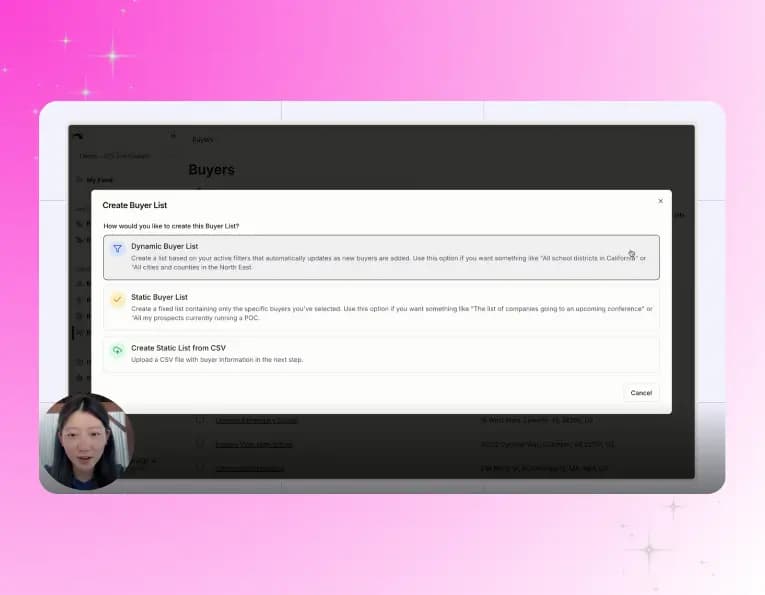 Create a conference campaignTurn conference badge scans into pipeline. Import your contact list, surface buying signals across every account you met, and follow up with context.
